For teachers

The Lazy Brain in the classroom

Each Lazy Brain story is a ready-made circle time: a real family moment, a feeling to name, and one small step to try. Below you'll find a lesson starter, activities and discussion prompts for all nine stories — written for ages 3–8, and free to use with your class.

You can read every story aloud from its story page, and the parent & educator guides have printable scripts for the trickier moments.

Lesson ideas in:

Story 1 of 9

The Lazy Brain — Emmeline and the Remote Control

Screen time, boredom and imagination

Lesson ideas

  • Screen-free starter: after reading, give each table one plain cardboard box and ten minutes. Ask: what could this become? Vote on the most surprising idea.
  • Boredom brainstorm: make a class list of things to do when there is 'nothing to do'. Keep it on the wall for wet break times.
  • Busy Brain badge: children draw their own brain character and write one thing it loves doing instead of watching a screen.

Discussion prompts

  • Why does the Lazy Brain call the remote control an emergency?
  • What changed when the television went quiet?
  • Have you ever been bored and then had a really good idea? What happened?
  • What would you build from a big cardboard box?

Read the story

Story 2 of 9

Emmeline and the Lotion

Tricky routines, sensory feelings and making care playful

Lesson ideas

  • Routine remix: pick a classroom routine children find hard (tidying up, lining up). In small groups, invent one silly game that would make it easier, then try the best one for a week.
  • Feelings thermometer: talk about 'too sticky, too cold, too lotion-y'. Children share one thing that feels uncomfortable to them and one thing that helps.
  • Counting game: like the Heart Hunt, hide paper hearts around the room and count them together — forwards, then backwards.

Discussion prompts

  • Why does Emmeline hide behind the curtains?
  • Mum doesn't argue — she makes it a game. What games help you with jobs you don't like?
  • The Lazy Brain says excuses are 'important work'. Are they? When do excuses help and when do they get in the way?

Read the story

Story 3 of 9

Emmeline and the Seventeen Bedtime Plans

Busy minds, bedtime worries and letting ideas wait

Lesson ideas

  • Idea parking lot: give the class a shared notebook or poster where children can 'park' exciting ideas so they can wait safely until tomorrow — just like Emmeline's seventeen plans.
  • Wind-down sequencing: put the story's bedtime steps (water, toilet, socks, ideas) on cards and let children order them, then design their own calm five-step wind-down.
  • Invent-a-machine: children draw a machine like Emmeline's sleep machine and explain in one sentence what it does.

Discussion prompts

  • Why do you think Emmeline's brain gets busiest exactly at bedtime?
  • Mum keeps saying 'tomorrow'. How does that help Emmeline?
  • What helps your own brain feel calm and ready to rest?

Read the story

Story 4 of 9

Emmeline and the Little Crown

Courage, nervous feelings and taking one more step

Lesson ideas

  • Paper crown craft: every child makes a little crown and writes or draws one brave thing they have done — or want to try — inside it.
  • One more step: share a class challenge (a climbing frame, reading aloud, a new game). Break it into tiny steps and celebrate each step, not just the finish.
  • Nervous-and-brave sorting: read out situations and let children show with thumbs whether they'd feel nervous, brave, or both at once. Talk about how 'both' is allowed.

Discussion prompts

  • Is the crown magic, or does something else make Emmeline brave?
  • Can you feel nervous and brave at the same time? How?
  • Tell about a time you took 'one more step' even though you weren't sure.

Read the story

Story 5 of 9

Emmeline and the Very Important Box

Creativity, pretend play and making something from nothing

Lesson ideas

  • What could this become? Show the class everyday objects (a spoon, a sock, a tube). Children take turns giving each object a brand-new job.
  • Box build day: bring in clean boxes and let groups build together, then give a one-minute tour of their creation.
  • Story math: measure, compare and count the boxes before building — biggest, smallest, how many windows does our castle need?

Discussion prompts

  • Why does the box become 'very important'? It started as almost nothing.
  • Do you need expensive toys to have a big adventure? Why not?
  • What is the best thing you ever made from something ordinary?

Read the story

Story 6 of 9

Emmeline and the Mixed Up Morning

When plans go wrong, resetting the day

Lesson ideas

  • Pause-button practice: teach the story's reset — stop, one slow breath, new plan. Practise it together, then use it as a real class tool when things go wrong.
  • Mixed-up morning mime: children act out a morning where everything goes wrong (missing shoe, burnt toast), then act out the same morning with a pause and a new plan.
  • Good-day rescue plan: each child draws a three-step 'rescue plan' for a bad moment: what I do, who can help, what comes next.

Discussion prompts

  • Does one mixed-up morning have to ruin the whole day? Why not?
  • What does Emmeline do to turn her morning around?
  • What helps you when your day starts badly?

Read the story

Story 7 of 9

Emmeline and the Helping Hands

Kindness, noticing others and small helpful acts

Lesson ideas

  • Kindness spotters: for one week, children quietly notice helpful acts in class and add them to a Helping Hands wall (paper hands with one kind act written on each).
  • Small is big: brainstorm the smallest possible helpful acts — carrying one bag, sharing one crayon — and talk about why small help still counts.
  • Helping hands chain: each child writes one way they can help at school or home on a paper strip; link them into a class chain.

Discussion prompts

  • Emmeline learns that helping doesn't make her world smaller. What does that mean?
  • Who helped you recently, even in a tiny way? How did it feel?
  • What is one small thing our class could do to help someone this week?

Read the story

Story 8 of 9

Emmeline and the Great Shell Hunt

Nature, exploring and plans that change

Lesson ideas

  • Nature treasure hunt: take the class outside (playground, park, beach) with a simple list — something smooth, something tiny, something beautiful — and share finds afterwards.
  • Plan B poster: the best day doesn't always go to plan. Children draw 'Plan A' and a happy 'Plan B' for a trip or party.
  • Shell science: if you can bring shells or pebbles in, sort them by size, colour and texture, and count the collection together.

Discussion prompts

  • What does the beach teach Emmeline about the 'best day'?
  • Have you had a day that went wrong but turned out lovely anyway?
  • What treasures would you hunt for near our school?

Read the story

Story 9 of 9

The Lazy Brain Loves Hokkien Mee

Food, family and celebrating where we come from

Lesson ideas

  • Food from home: invite children to share (or draw) a dish their family loves. Make a class recipe book with one page per child.
  • Map the meal: find Singapore on a map, then find where each child's family dish comes from and mark them all.
  • Five-senses feast: describe a favourite food using all five senses — a gentle introduction to descriptive writing.

Discussion prompts

  • Why do you think food matters so much to Emmeline's family?
  • What food tastes like home to you?
  • What can a meal tell us about a family or a country?

Read the story

Reading with a whole school or a large group? Get in touch and we'll sort out something fair. These ideas support everyday classroom conversations and don't replace professional medical or therapeutic advice.

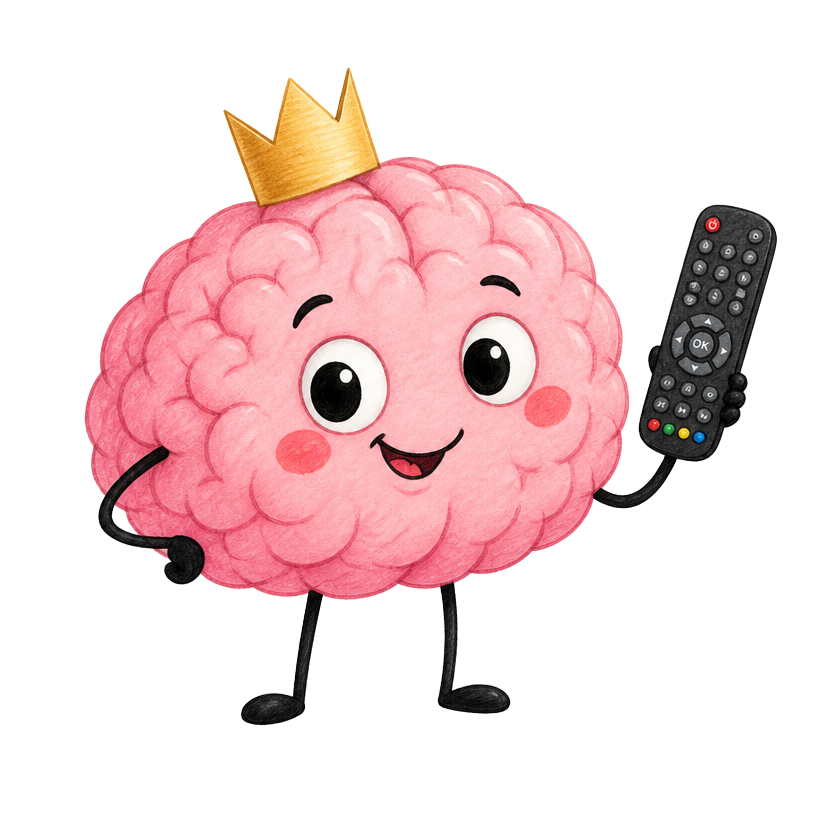
The Lazy Brain character waving a remote control

Important ideas, straight to your inbox

New books, read-aloud tips and free printable activities. One letter every month or so — the Lazy Brain is far too lazy to send more.

For grown-ups only. No spam, unsubscribe any time.